“देर न करना घर जाने में

वरना घर खो जाएँगे”
I have always preferred prose over poetry. Readers around me have told me, with tremendous conviction, that I haven’t found the right poet for me yet. And believe you me, I have tried to read the works of a few famous poets. But they have done absolutely nothing for me. I do believe that there is something vital that I am missing. One day, I hope to find it.
While searching for good poetry, I somehow landed in the world of ghazals. I found myself enjoying the ghazals sung by Ghulam Ali and Jagjit Singh; they felt soothing. And while it has become taboo now, I have also enjoyed the works of the Pakistani rapper Talha Anjum. These experiences gave me the idea to explore the world of Urdu shayars.
One of the advantages of growing up in a country like India, which has a unique mixture of cultures and ideas, is the exposure to multiple languages from a very young age. While I have had no formal training in learning Urdu, I have always known it (some of it), as words from Urdu have been frequently borrowed in the colloquial Hindi spoken all over India. And since there was no language barrier, I decided to move ahead.
I had two gateways into the world of the Shayars. The first was Jaun Elia, and the second was Nida Fazli. Despite the former being more popular nowadays, why I chose the latter will always remain a mystery to me. But I’m really glad that I dipped my toes in this ocean of Urdu literature through his works.
Nida Fazli was born in Delhi and grew up in Gwalior. His father was a recognised Urdu poet, and so he had always been surrounded by poetry throughout his life. The Partition between India and Pakistan affected him terribly as he decided to stay in India while his family moved away to the other country. Later in his life, Nida Fazli moved to Mumbai, continued writing, and even lent some of his most beautiful works to Hindi movies. He is notably known for the song “Hoshwalon Ko Khabar Kya”, which was sung by Jagjit Singh in the movie Sarfarosh.
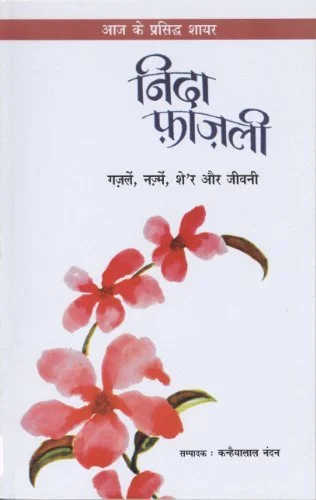
The collection “aaj k prasidh shayar nida fazli” includes various ghazals, shers, and nazms by Nida Fazli. You start getting drawn in from the very beginning. The collection does a great job in providing us with a potpourri of emotions ranging from the mundane to as intense as the pain of the Partition. This is probably one of Nida Fazli’s greatest achievements: that he could capture almost any emotion and serve it to us with the garnishings of the most beautiful language.
Here’s an example:
“सीधा-सादा डाकिया, जादू करें महान
एक ही थैले में भरे, आँसू और मुस्कान।”
With such subtlety, Nida Fazli conveys this simple yet beautiful line that invokes multiple feelings within us. I understand that this line is not as relevant today; however, one can appreciate the anticipation of the people back then who depended on postal services to get information about their loved ones.
Following is an example that declares the importance of passion in one’s life:
“स से नि तक सात सुर, सात सुरों में राग
उतना ही संगीत है, जितनी तुझमें आग।”
While the above examples showcase a simplicity with which he could evoke deep emotions, it is not at all the case that he could not speak deeply about emotions. He has done that multiple times and has done it effectively.
“भटकती रही यूँ ही हर बंदगी
मिली न कहीं से कोई रोशनी
छुआ था कहीं भीड़ में आदमी
हुआ मुझ में रोशन खुदा देर से ”
In the above verse, he brilliantly explains the failure of external prayers and search and the importance of introspection and truly becoming human before transcending into something divine.
One of my favourite and most relatable lines from a sher was this:
“कभी-कभी यूँ भी हमने अपने जी को बहलाया है
जिन बातों को ख़ुद नहीं समझे, औरों को समझाया है। ”
There are countless examples of such wonderful and deep lines in this collection, and I have written notes for most of them on my Kindle. A few of these have a side note of “to learn”. I do hope that I learn some of these amazing shayaris and nazms so that I can visit them in my solitude.
There was one glaring issue that I found with the Kindle edition that I read, and that was the formatting of the shers and nazms. There were a few places where the exclamations were printed above the line from where they should have been, and a few instances where words were wrapped too tightly, breaking the flow of reading, and certain nazms started and ended abruptly without a clear demarcation. I hope this will be fixed soon.
About the content of the collection, I have nothing negative to report.
These shayaris and nazms have left me wanting more. Nida Fazli’s collection was a great introduction to this rich world of emotions and ideas that has always been near me but was somehow ignored. Will be listening to and reading more shayaris in the future.
My final rating:
If you liked the above article, please consider reading the following:
Greatness of one demands the sacrifice of two
A review of Mohan Rakesh's play आषाढ़ का एक दिन, exploring love, artistic ambition, sacrifice, and the irreversible passage of time.

Through the Kashmiri Stag's mouth: A Review of Sajad Malik's Munnu
A review of Sajad Malik's Munnu: A Boy From Kashmir
अक्टूबर जंक्शन
October Junction is tale by Divya Prakash Dubey that has garnered lots of love and attention from the Hindi reading world.